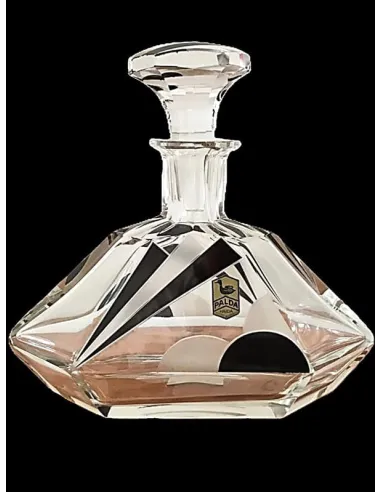

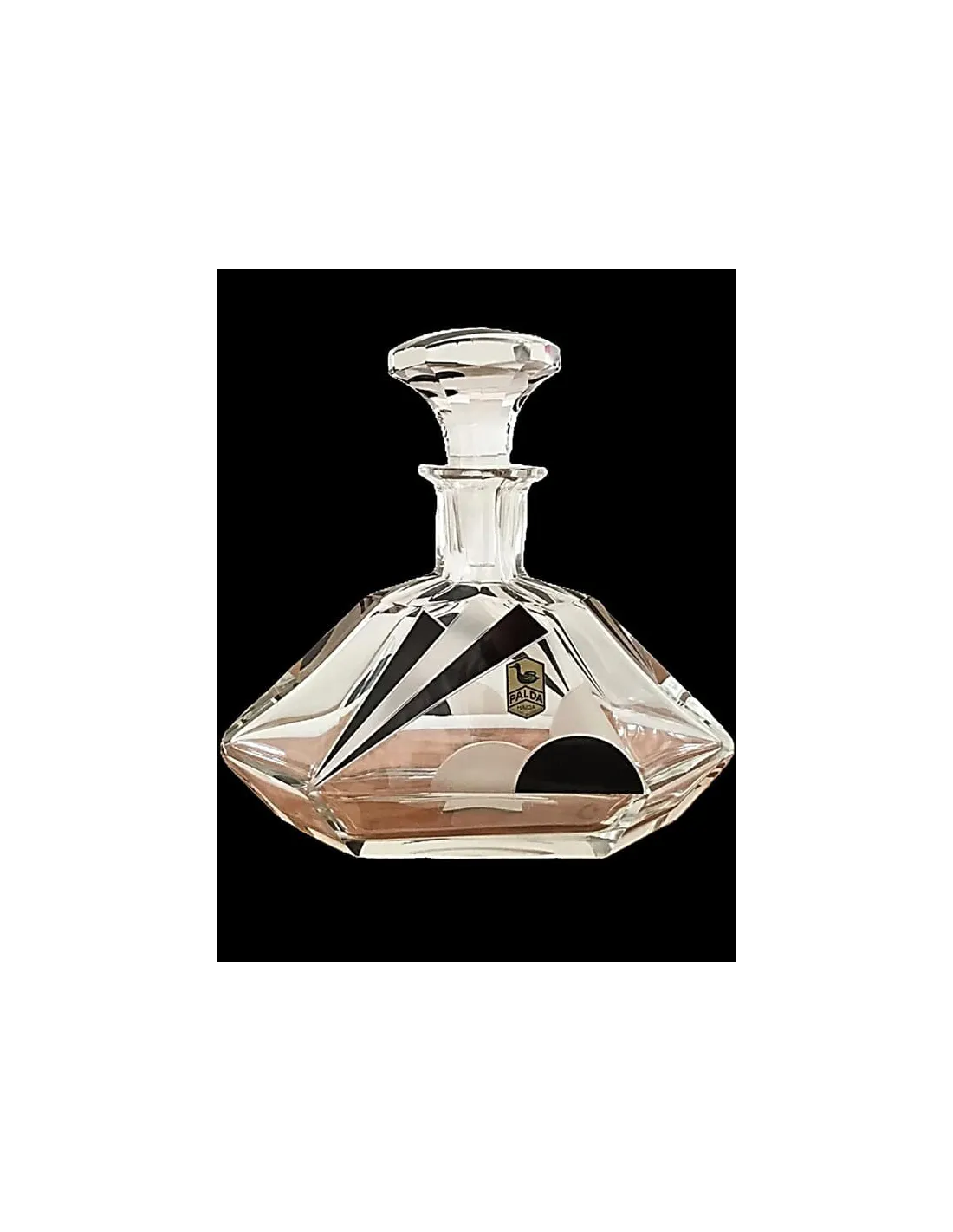


This exceptional decanter by Karel Palda is a true highlight of the 1930s. With its geometric décor, high-contrast black-and-white enamel painting, and faceted form, it embodies the unmistakable elegance of the Art Déco style and serves as a particularly fine example of Czech craftsmanship.
Bohemian glass designer Karel Palda established his glass workshop in the 1920s in the Czech town of Haida (now Nový Bor). Located in a region with a centuries-old glassmaking tradition, his manufactory set new standards and remains renowned today for its innovative designs.
Karel Palda specialized in artistically refined Bohemian glass, including vases, bowls, boxes, perfume bottles, decanters, and complete vanity sets. His work is characterized by clean geometric shapes, stylized motifs, and high-contrast colors such as black, gold, or red. Many pieces were further enhanced with intricate cutting, engraving, and enamel painting, lending them a distinctive elegance.
At its peak, the workshop employed several dozen people and collaborated closely with other local workshops as well as the prestigious glassmaking school in Bor/Haida. Designs by artists such as Alexander Pfohl Jr. helped shape the artistic identity of the firm’s output. By the 1930s, Karel Palda was exporting glass throughout Europe and overseas—to cities including Vienna, London, Milan, and Barcelona.
Karel Palda ranks among the most significant glass designers of his era. His work represents the golden age of Bohemian glass art during the 1920s and 1930s. Until the end of the Second World War, the glass manufactory remained a significant producer of luxury functional glassware. After 1945, the manufactory was merged with the firm of Leopold Palda and relocated to Steinschönau (Kamenický Šenov).


Art Nouveau Carafe, Topázio Casquinha Portugal