



Silverware and other metal objects - Art Deco, Art Nouveau, Design
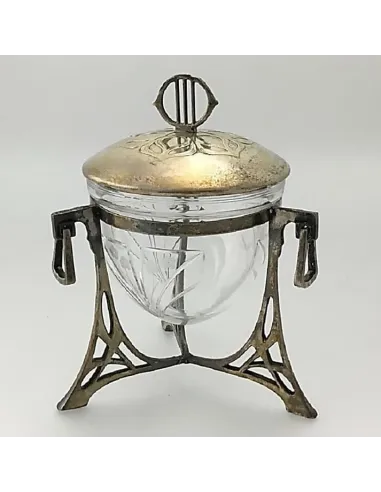
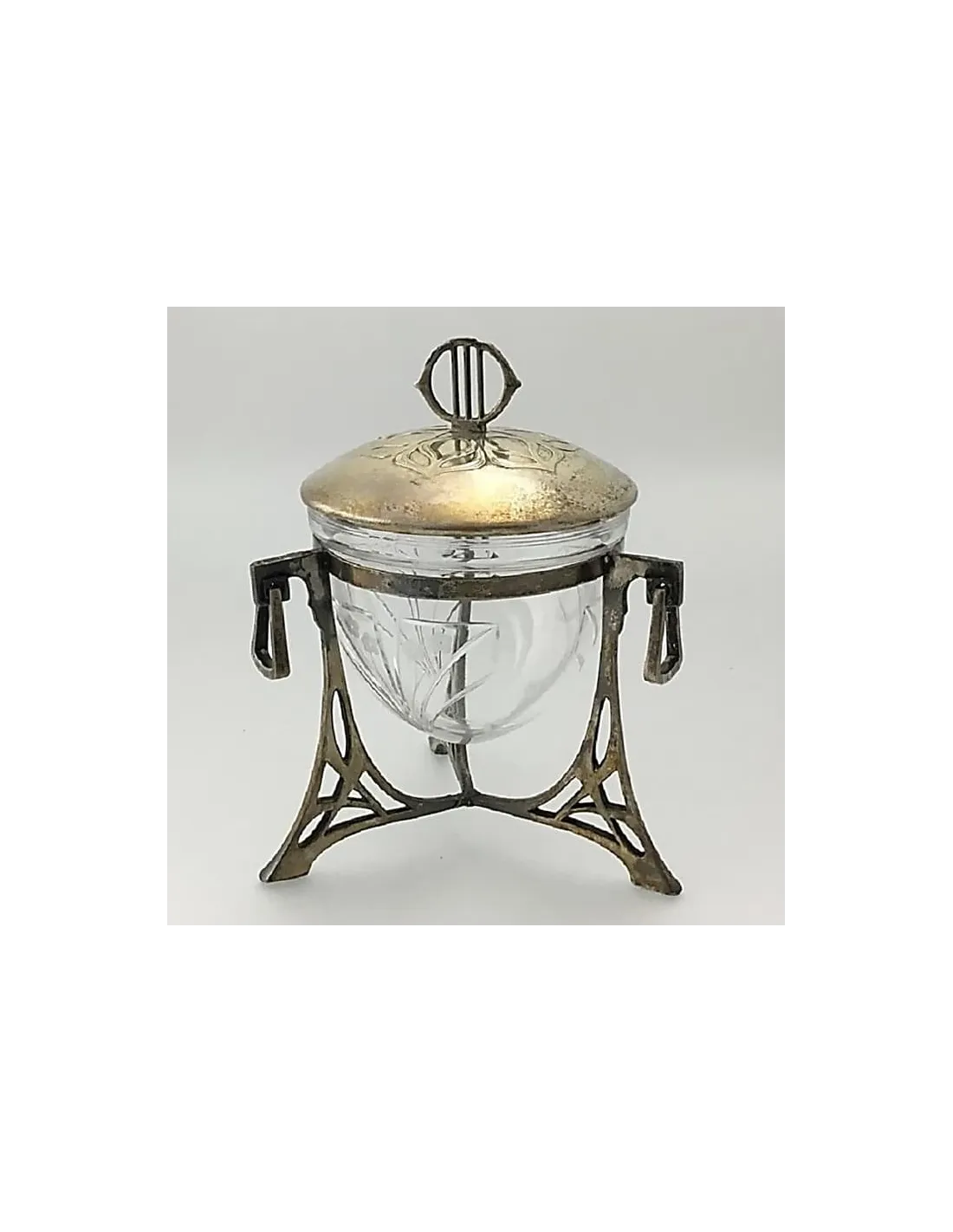
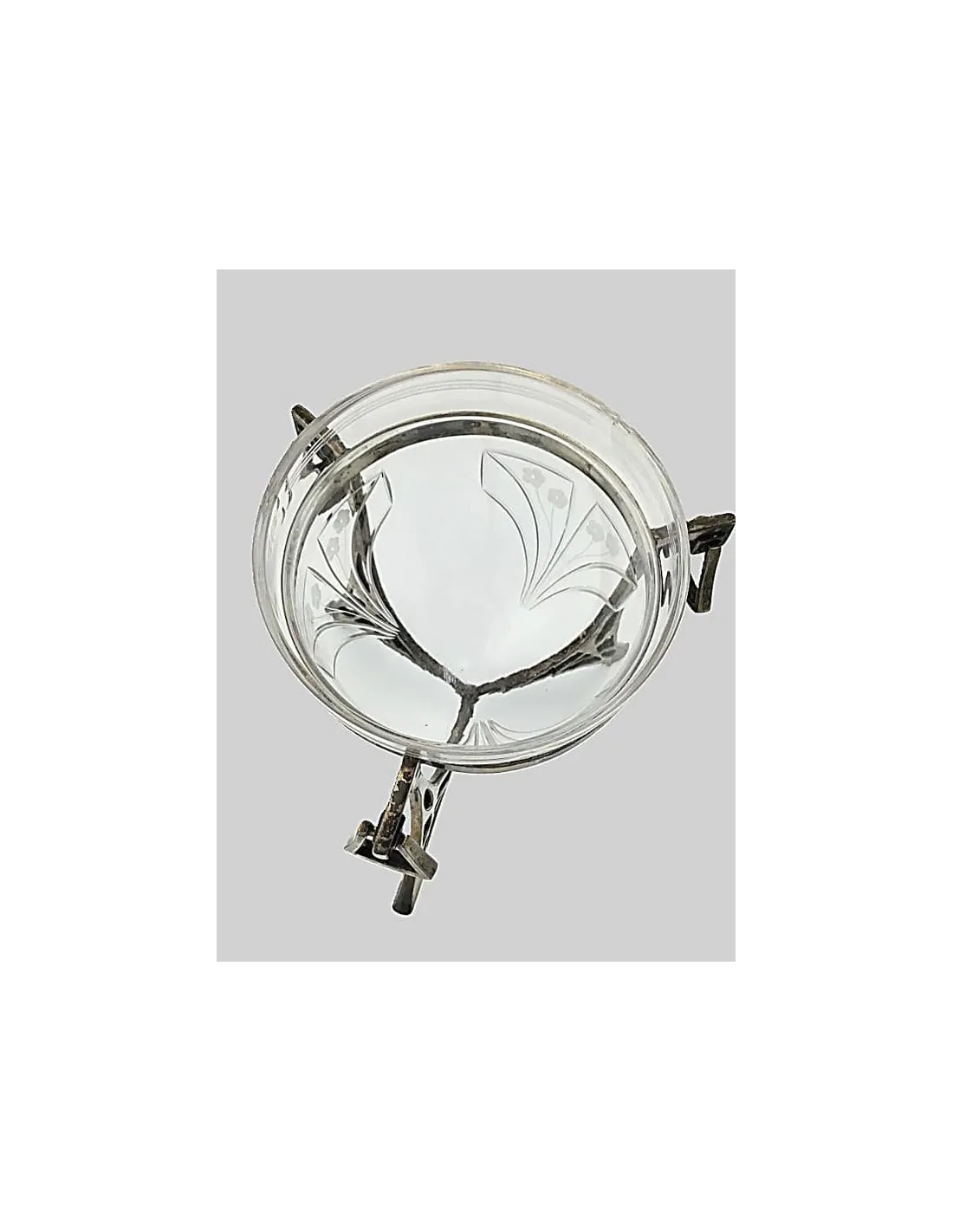
The cut-glass insert of this confectionery jar rests within a silver-plated brass mount. Its delicately pierced, trefoil-shaped frame—featuring linear struts and ornamental handles—is characteristic of the mature Art Nouveau style produced by the Württembergische Metallwarenfabrik (WMF). The lid is adorned with finely engraved floral lines and a distinctive ring-shaped finial.
The piece bears the WMF "ostrich" hallmark, along with the codes "I/O" (indicating a medium-thickness silver plating) and "OX" (denoting an oxidized finish), pointing to a date of origin between 1905 and 1910.
This dish serves as a fine example of the elegant synthesis of craftsmanship, industrial precision, and the stylistic hallmarks of the early 20th century—an authentic artifact from the heyday of WMF’s Art Nouveau production.
The history of the Württembergische Metallwarenfabrik (WMF) began in 1880, following the merger of two Württemberg-based firms: Daniel Straub’s company (Straub & Sohn) in Geislingen an der Steige and Alfred Ritter’s company (A. Ritter & Co.) in Esslingen.
WMF rapidly evolved into one of Europe’s leading manufacturers of metalware and silver goods. By 1900, the WMF name had become synonymous with high-quality, silver-plated decorative and functional objects, highly prized in both the German and international markets. The mark "WMFB" was used to identify goods intended for export to the English market.
During the Art Nouveau period, WMF set new standards through innovative design, the application of modern electroplating techniques, and collaborations with various artists and designers. Württembergische Metallwarenfabrik was a leader in European silver design and shaped the style of silver-plated craftsmanship for an entire era.