



Porcelain and ceramics - Art Nouveau, Art Déco, Design
Vase Hutschenreuther Selb, circa 1920
Hutschenreuther Selb
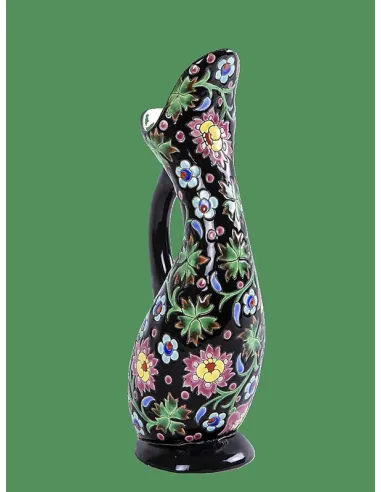
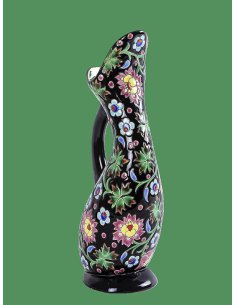
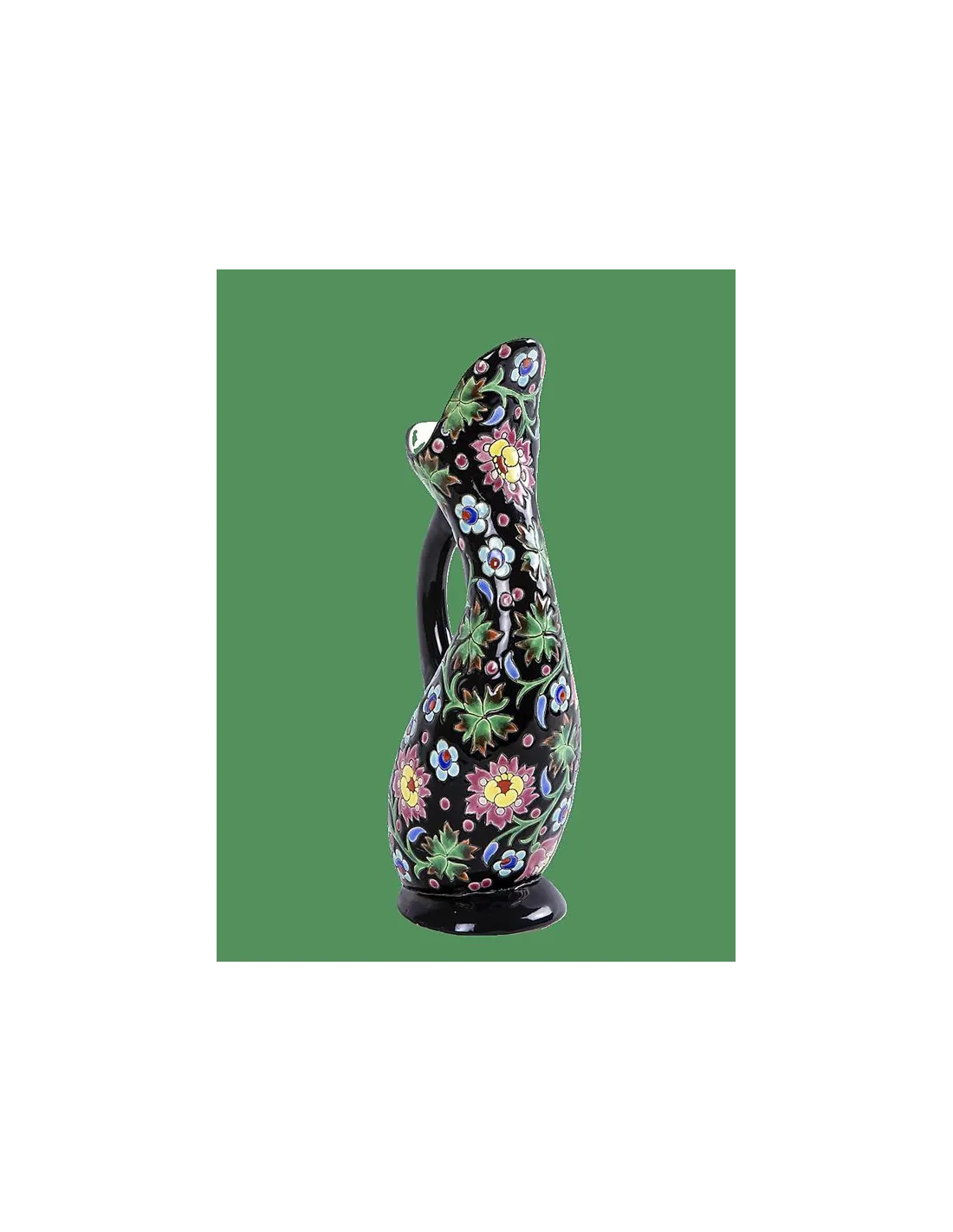
This hand-painted jug hails from the renowned French manufactory Emaux de Longwy and was produced between 1955 and 1975.
It features the colorful cloisonné enamel decoration typical of Longwy: vibrant floral vines set against a deep black background—a lively interplay of color, form, and contrast.
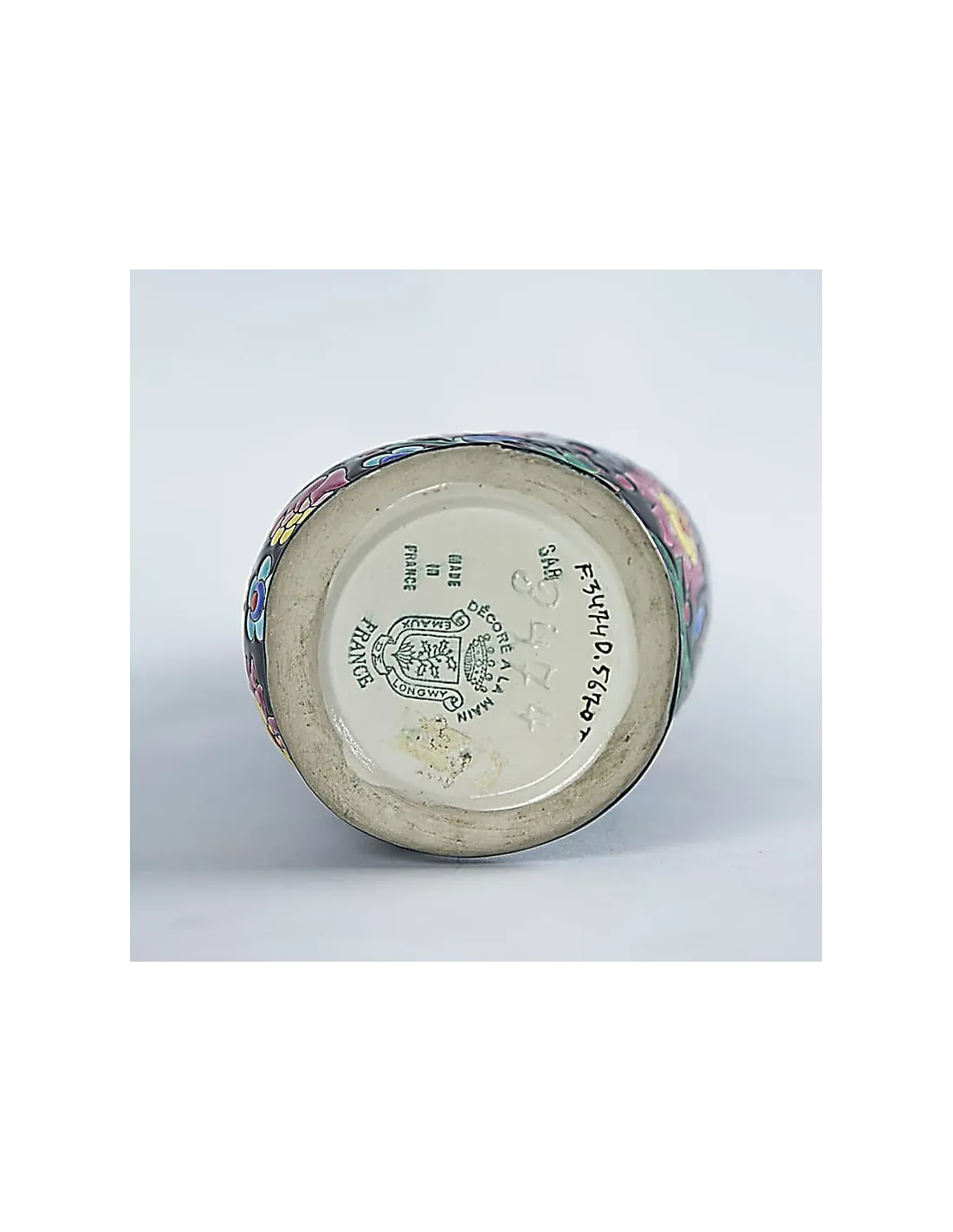
On its underside, the jug bears the characteristic base mark featuring the Longwy coat of arms, the inscription "Émaux décoré à la main" as well as the decoration and model numbers F-3744 / D-5674.
Longwy enamel pieces tell a story of French design history, making them an ideal choice for collectors of Mid-Century art ceramics.
The Faïencerie de Longwy was founded in 1798 in the town of Longwy (Lorraine).
It became famous in the early 19th century for its finely glazed faience and, especially, from 1872 onward with the introduction of the famous cloisonné enamel technique. This technique involves defining the outlines of the decoration with fine lines and then filling them with bold colors. The surface decoration was applied by hand and fired under glaze– a process reminiscent of oriental enamel art.
The Émaux de Longwy experienced a particularly creative heyday between 1920 and 1970. Numerous artists and designers – including Mathurin Méheut, Paul Milet, and Camille Tharaud – designed limited editions for the manufactory.
To this day, the manufacturer Longwy stands for the finest ceramic craftsmanship from France and for vibrantly colored enamel decorations – each piece is unique, signed, and handcrafted.
Vase Hutschenreuther Selb, circa 1920


Coffee Cup Art Déco, Friedrich Kästner


Art Nouveau Jardinière "Grape Carrier", Majolica Karlsruhe


Cup Art Nouveau "Pensée", ROSENTHAL


Art Déco Vase, Boch Frères La Louvière


Art Déco Charles Catteau Vase, Boch Frères Kéramis