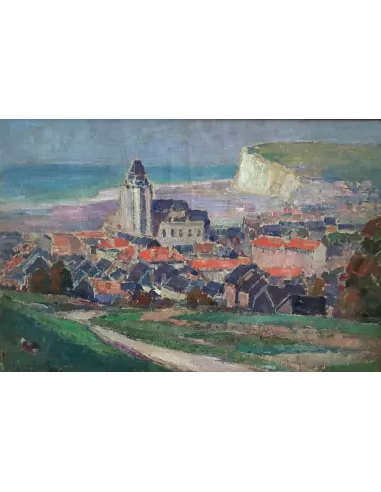


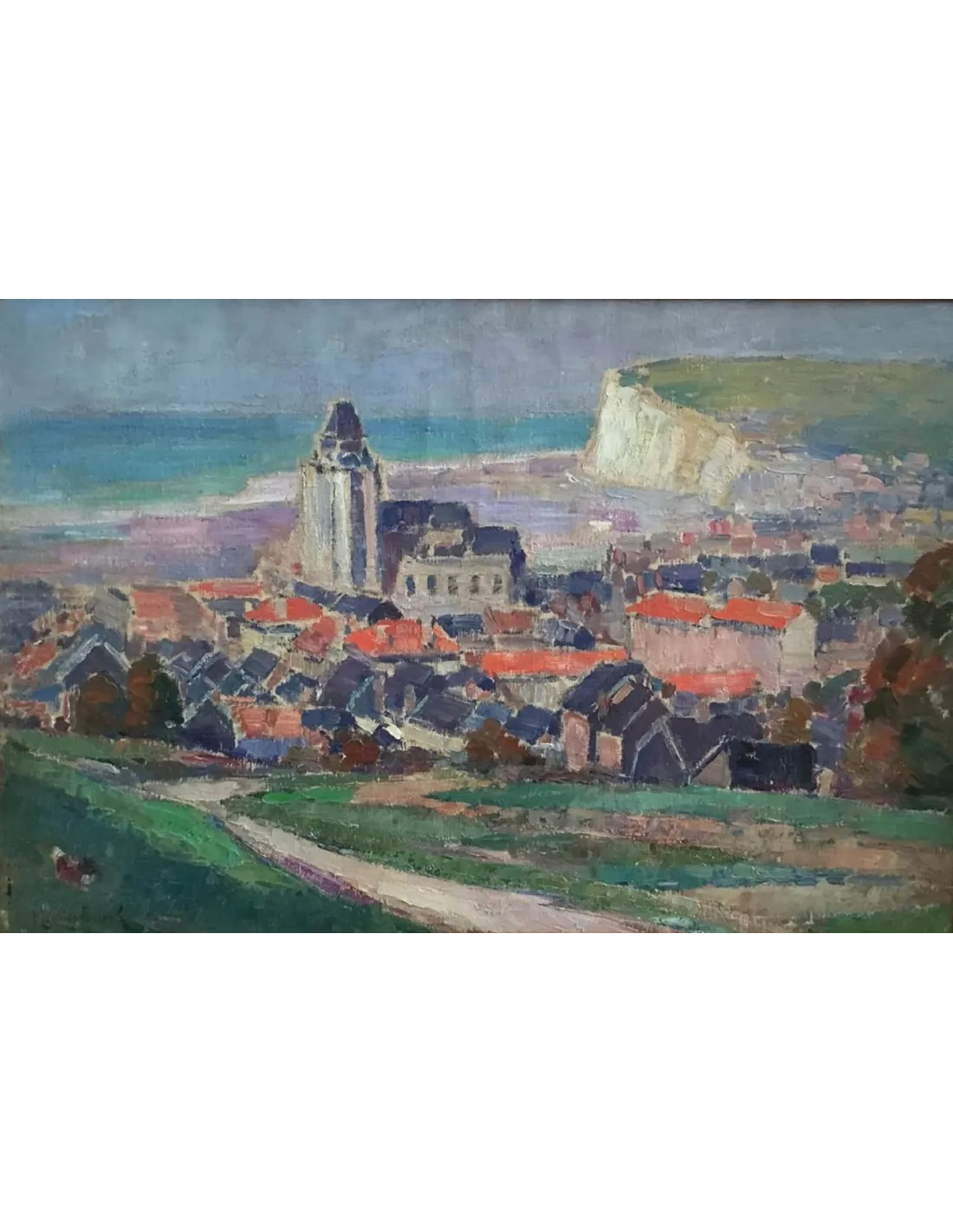
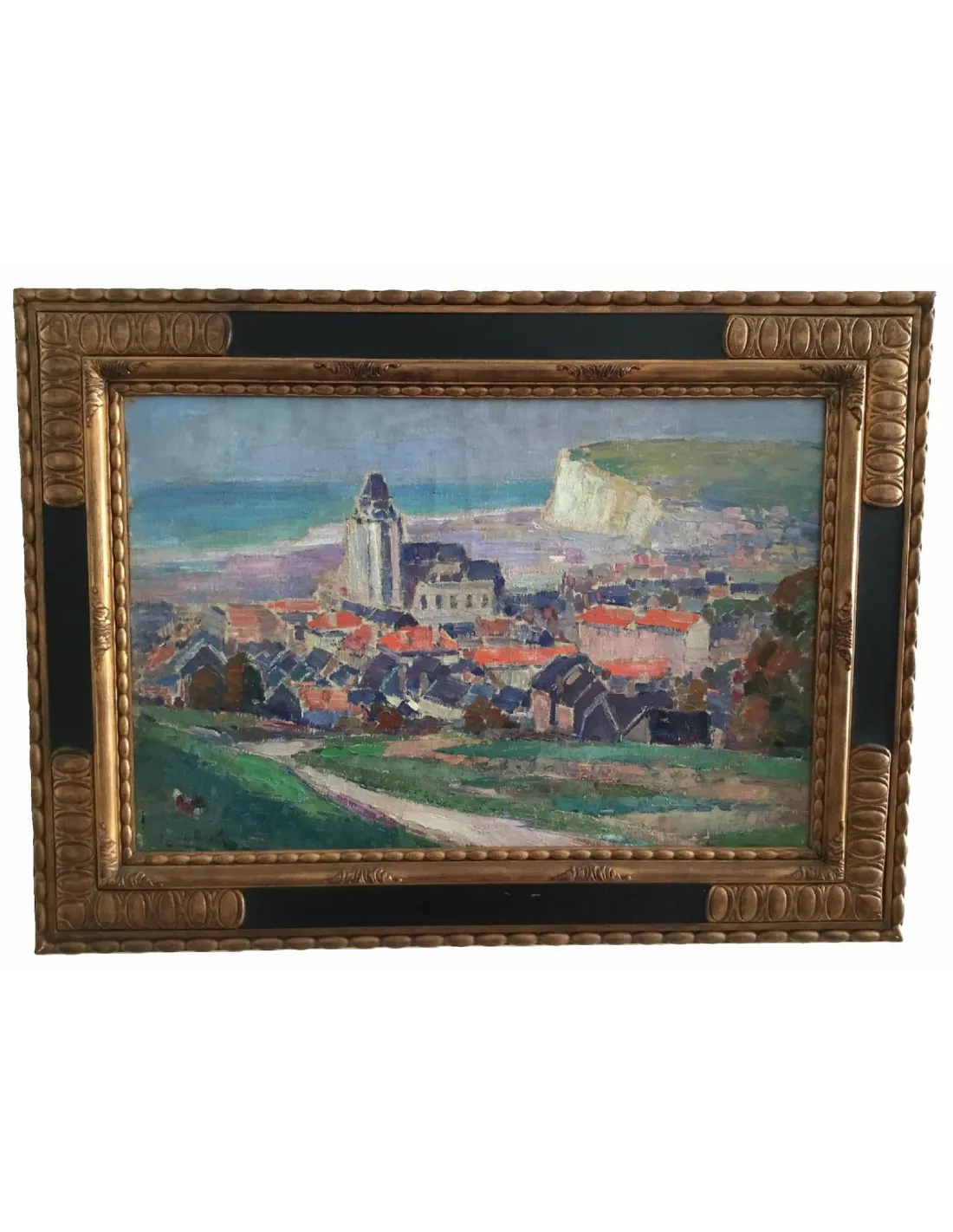


Maurice Blieck's oil painting depicts a picturesque coastal town and a view of a striking white cliff overlooking the sea. A church rises in the center, surrounded by red roofs and green fields. The composition combines geometric clarity with vibrant color.
Based on its style and brushwork, the painting can be dated to the Late Impressionist or Post-Impressionist period, circa 1905–1920. Since Blieck died in 1922, it is likely that the painting was created between 1910 and 1920.
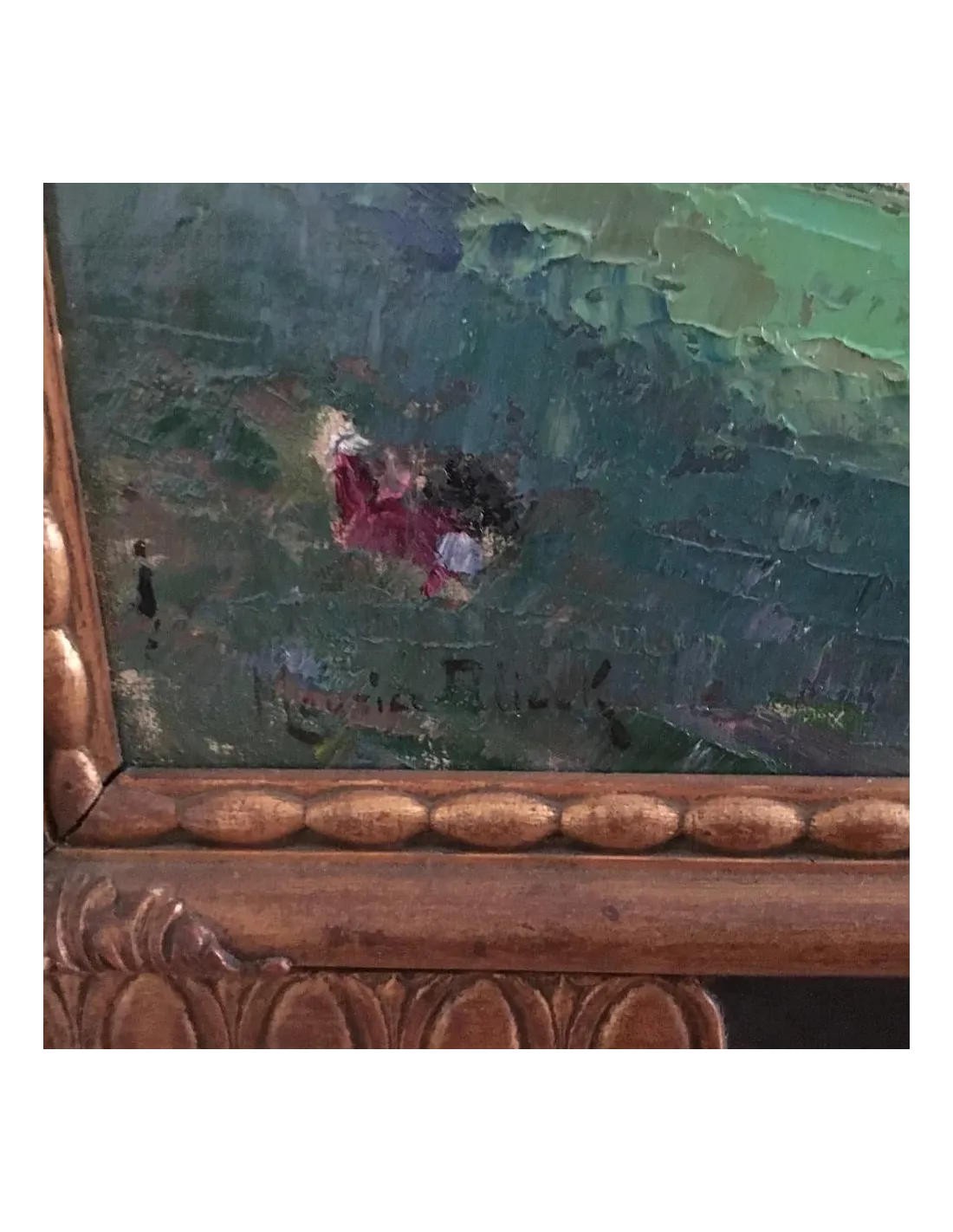
The original frame, with its egg-and-dart relief and gilded moldings, also dates from this period. Typical of late Historicism and early Art Nouveau, it emphasizes the depth of the image and lends the work a stately presence. Its craftsmanship and original condition make it a valuable companion to the painting.
Maurice Blieck (1876–1922) was a Belgian painter known for his landscapes and cityscapes. He studied at the Académie Royale des Beaux-Arts in Brussels and lived for periods in Paris and London. Later, he worked at the Rouge-Cloître near Brussels.
As a member of the artists' group Le Sillon, Blieck combined artistic expression with social activism. He is considered a representative of Belgian Luminism and was strongly influenced by French Impressionism.
His works are characterized by a remarkable ability to capture light and atmosphere—especially in his coastal and urban landscapes.
Today, his paintings are sought-after collector's items of early modernism in Belgium.


Fernand TOUSSAINT (1873-1956) Vase with flowers and fruit bowl