Paul Hagemans – “Opéra” (1933), Luminist Painting
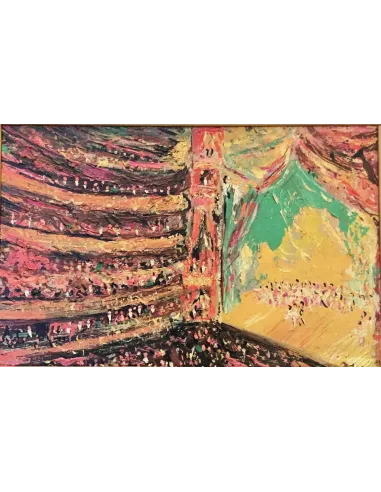
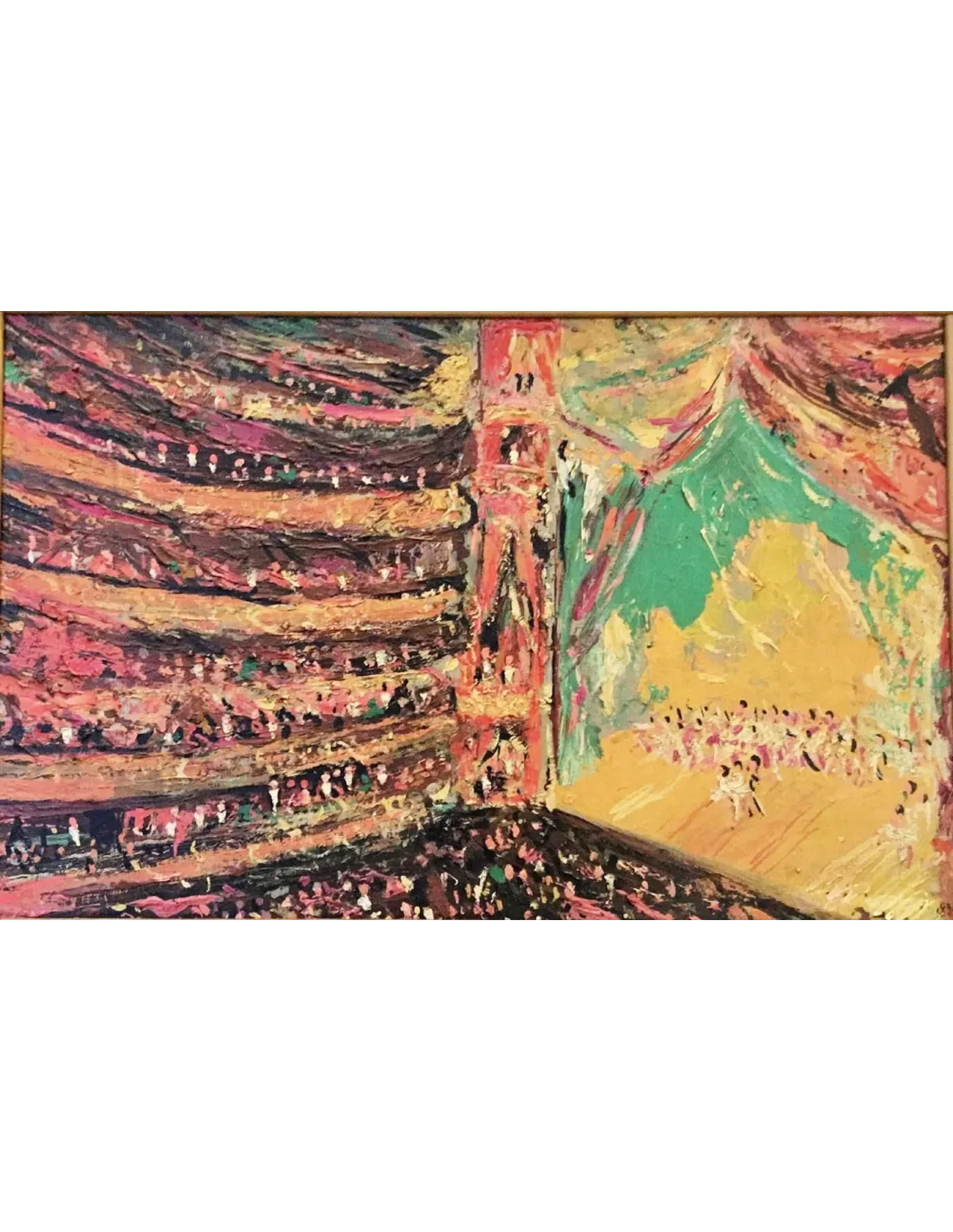
This vibrant painting "Opéra" (1933) by Paul Hagemans depicts an atmospherically rich scene from an opera house and is a characteristic example of Belgian painting at the intersection of Luminism, Impressionism, and Expressionism.
The composition is dynamically structured: while the stage glows in luminous yellows and greens on the right side of the painting, the audience is arranged in densely packed rows on the left. The dynamic perspective and the rhythmic arrangement of the figures create a strong sense of depth.
Hagemans employs impasto paint application, strong contrasts, and a lively brushstroke. This results in a vibrant surface that makes the energy and emotional intensity of an evening at the opera immediately palpable.
The work is a fine example of the depiction of interior and social scenes in classical modernism and reflects the cultural life of the 1930s.
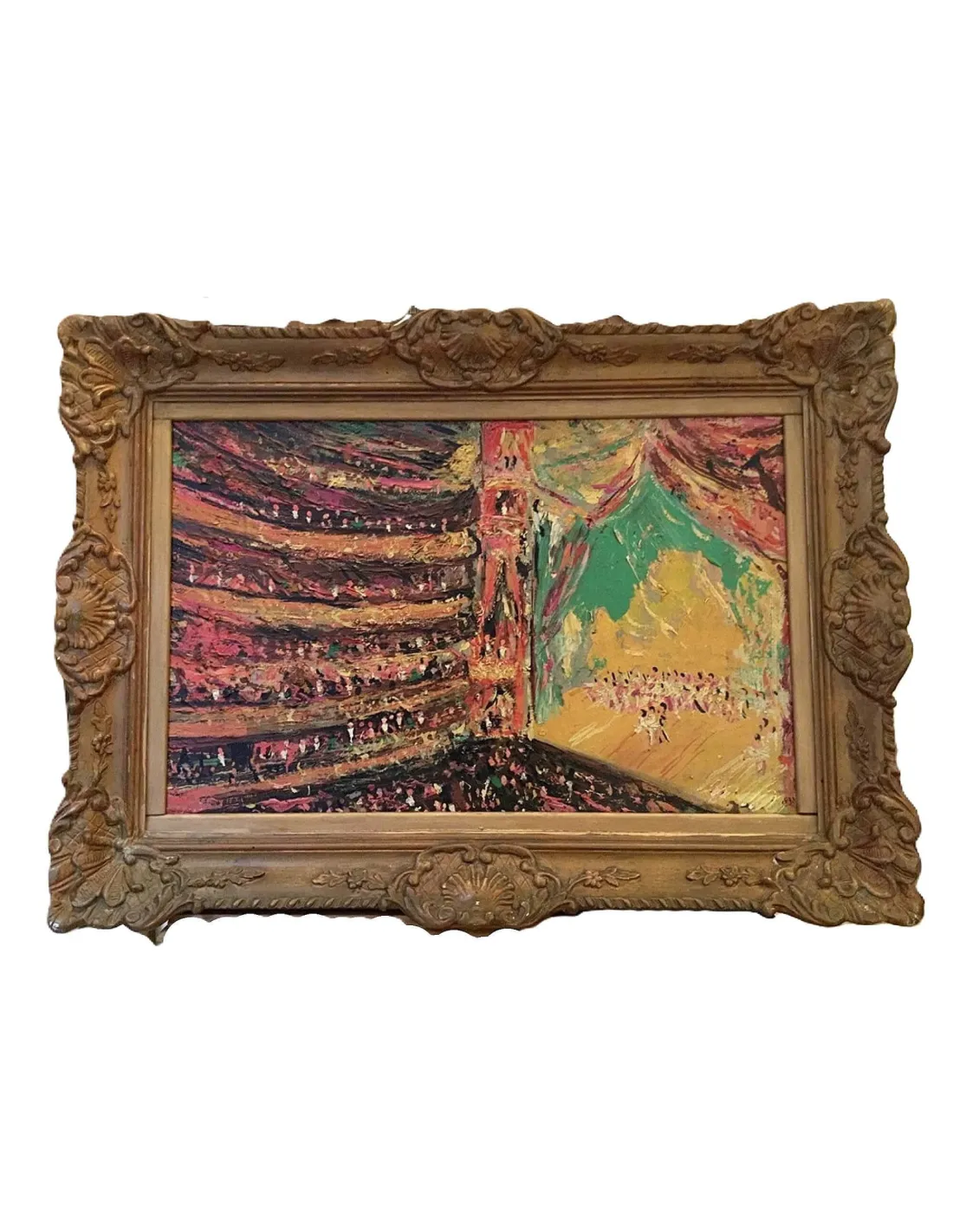
The richly ornamented frame underscores the painting's presence.
About the artist: Paul Hagemans (1884–1959)
Paul Hagemans was a Belgian painter, born in Antwerp and trained at the Royal Academy of Fine Arts. There, he studied under Isidore Verheyen and Herman Richir, among others.
As the son of the painter Maurice Hagemans, he was introduced to the art world at an early age and developed a distinctive style that straddled Impressionism and Expressionism.
His work primarily comprises cityscapes, interiors, and scenes of social life, characterized by vibrant colors and dynamic composition.
In works such as "Opéra," his remarkable ability to convey movement, light, and atmosphere through expressive color fields is evident. Stylistically, parallels can be drawn to Édouard Vuillard and Pierre Bonnard, but with a significantly more powerful and impulsive visual language.
Paul Hagemans exhibited regularly at national and international exhibitions and is considered one of the most interesting representatives of Belgian painting in the first half of the 20th century.