Max Moreau – Orientalist Painting, 1929
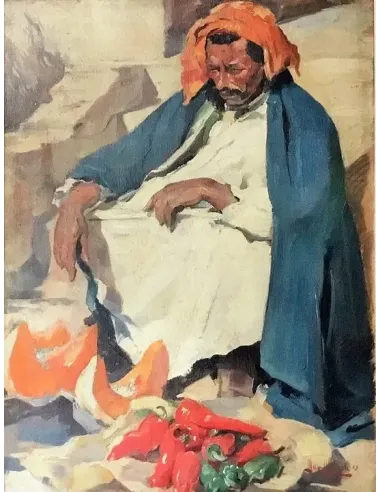
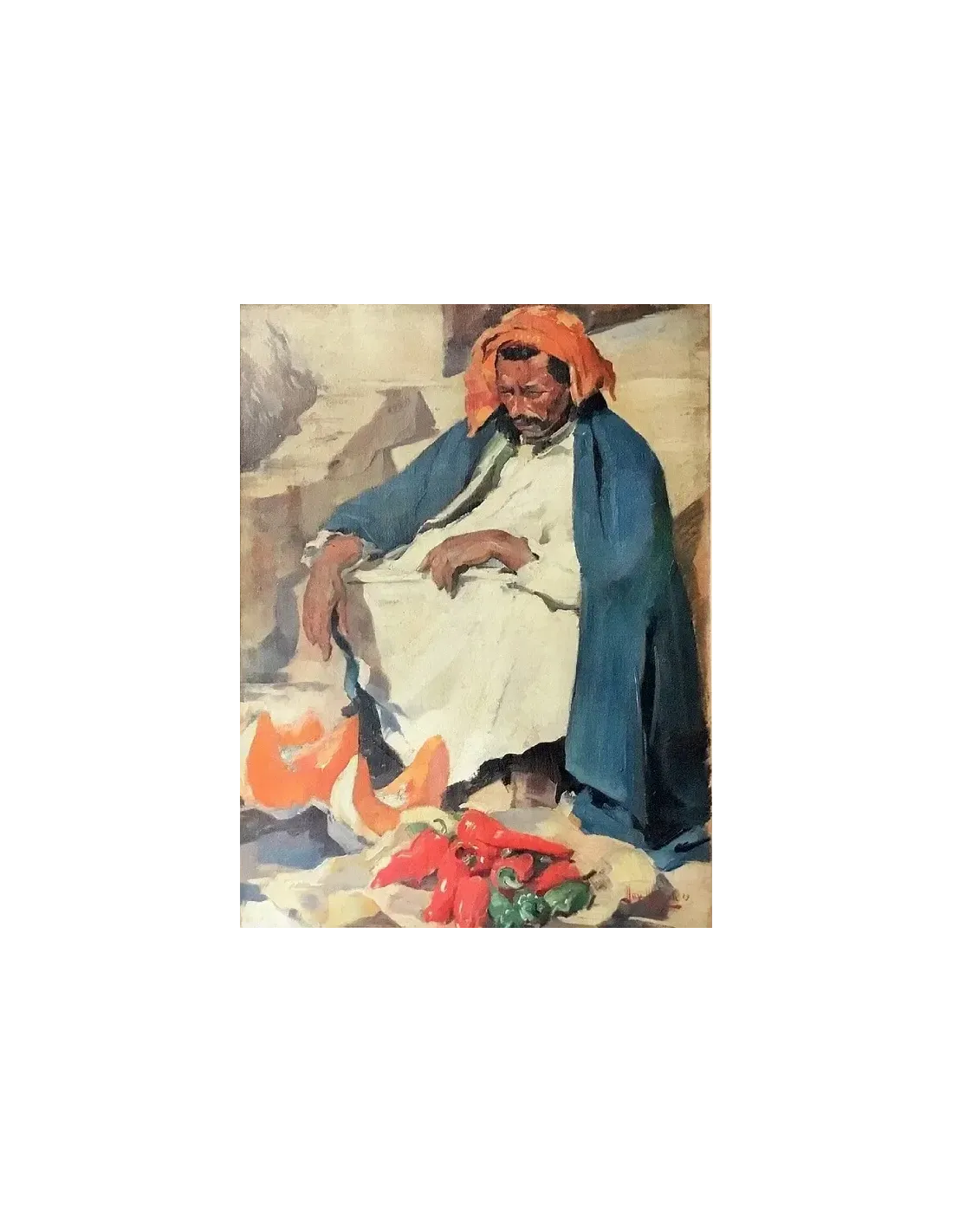
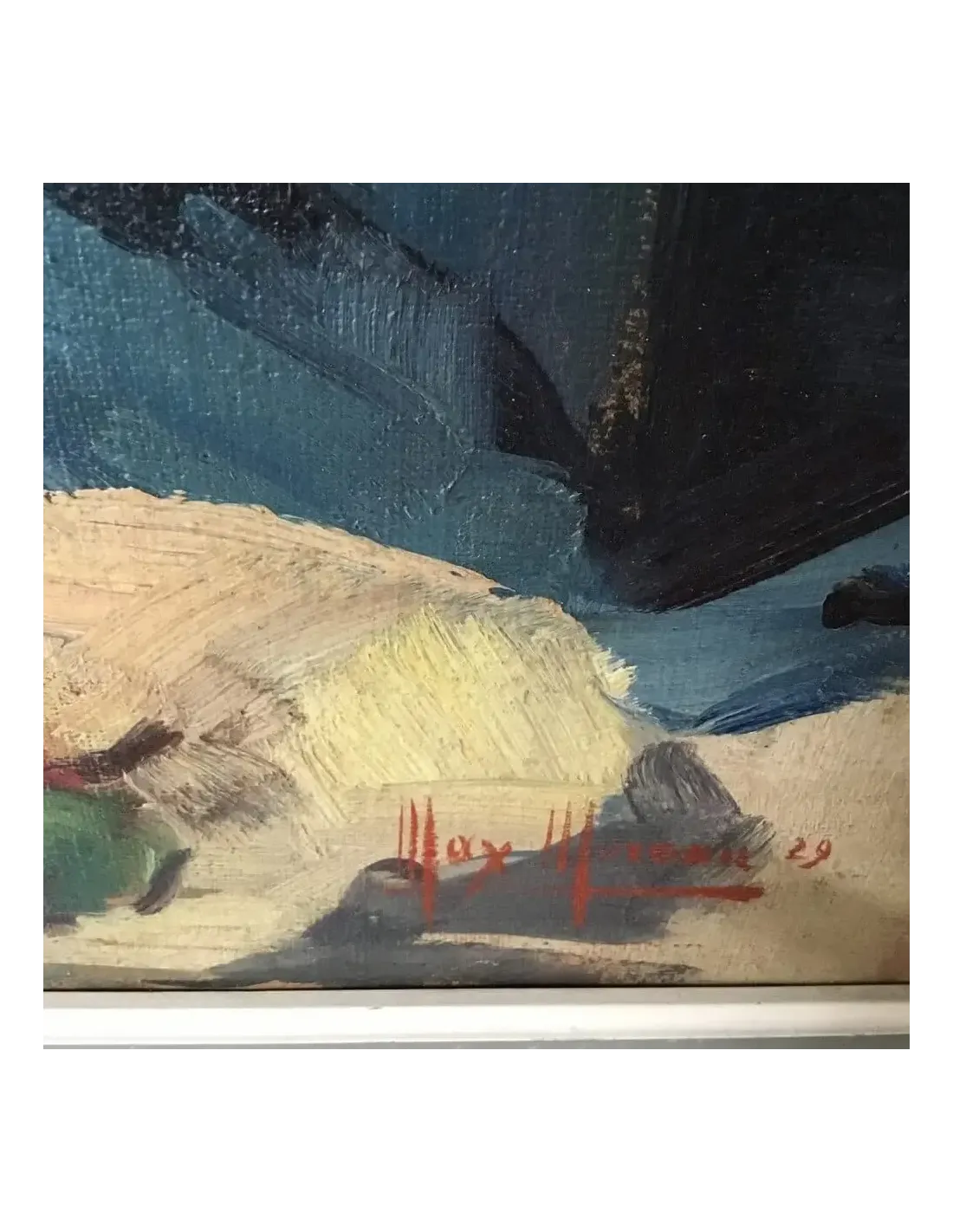
This Orientalist painting by Max Moreau from 1929 depicts a tranquil scene from everyday North African life and is in the tradition of early 20th-century European Orientalist painting.
At the center of the composition, an elderly man in traditional clothing sits on a low stone step. He wears a long white robe (djellaba) and a flowing blue coat over it. His head is covered with an orange cloth wrapped in a turban-like fashion.
The figure's posture appears serene and contemplative. His arms rest on his knees, and his gaze is lowered, as if he is lost in thought. The depiction conveys dignity and serenity and avoids folkloric exaggeration.
At his feet lie pumpkins and red and green bell peppers, their vibrant colors creating a lively contrast to the sand-colored architecture in the background. The suggestion of natural stone walls and warm light create an atmosphere reminiscent of North African markets.
The painting style shows an Impressionist influence, with loose brushstrokes and visible paint application. Light, color, and quiet observation of the moment characterize the balanced composition.
Orientalism in European Painting
Orientalist painting developed in Europe during the 19th and early 20th centuries and was particularly influenced by artists' travels to North Africa and the Middle East. Scenes from everyday life, markets, architecture, and portraits of the local population were among the preferred subjects of this art movement. Artists like Max Moreau absorbed these impressions and translated them into a European visual language that focused on light, atmosphere, and cultural encounters.
About the artist: Max Moreau (1902 – 1992)
The Belgian painter Max Moreau is particularly known for his Orientalist paintings. Between 1929 and 1938, he traveled extensively in Tunisia and other North African countries of the Maghreb. The culture, architecture, and especially the intense light of North Africa profoundly influenced his painting.
In 1947, Moreau moved to Marrakech with his wife, where a large portion of his Orientalist works were created.
In the 1950s, Max Moreau also gained international renown as a portraitist. In New York and Palm Beach, he portrayed numerous personalities from the worlds of theater, film, and opera.
His last exhibition took place in 1981, after Parkinson's disease forced him to retire from his artistic practice.
Max Moreau bequeathed his artistic estate to the city of Granada, where he had lived since 1966. His former residence is now a museum. The artist's studio has been fully preserved, and a large number of his works are on public display there.